01
Manufactured Direct
From our Pomona facility. Predictable lead times for orders from 20 to 200+ units. No distributor lag, no markup.
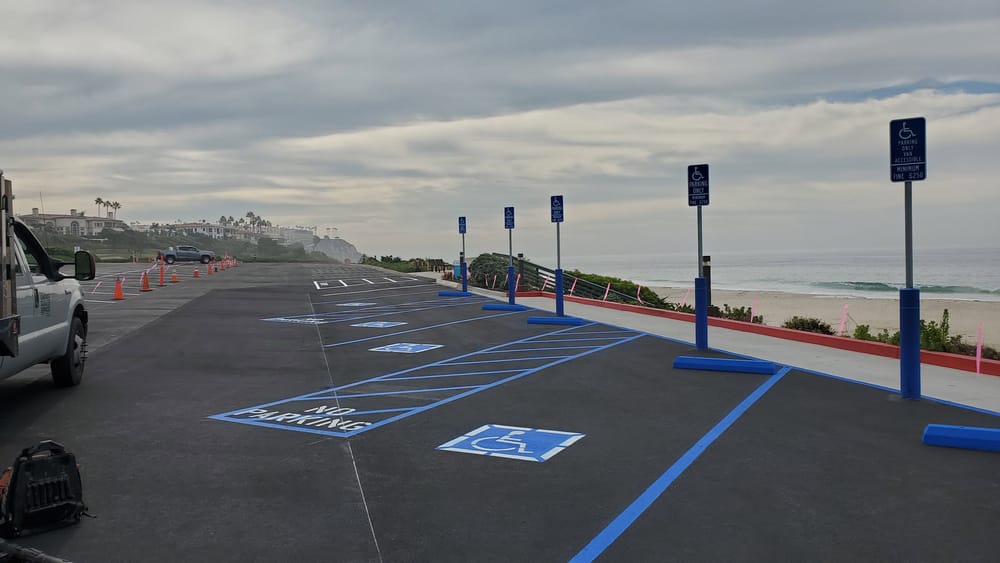
Three sizes, steel-reinforced and 4,500 PSI cylinder-tested, cast at our own plant in Pomona. Same product you may know as a parking block, parking bumper, curb stop or parking curb.
Concrete parking stops in three standard lengths. Every unit is cast with (2) #4 steel rebar and cylinder-tested to 4,500 PSI, with cast-in pin holes for rebar or epoxy anchoring.
| Profile | Model & length | H × W | Weight | Reinforcement | Best for |
|---|---|---|---|---|---|
| CB044′ (48") | 5.25" × 7.5" | 105 lbs | (2) #4 rebar | Compact spaces, residential | |
| CB066′ (72") | 5.25" × 7.5" | 165 lbs | (2) #4 rebar | Standard parking spaces | |
| CB088′ (96") | 5.25" × 7.5" | 210 lbs | (2) #4 rebar | Large spaces, high-traffic areas |
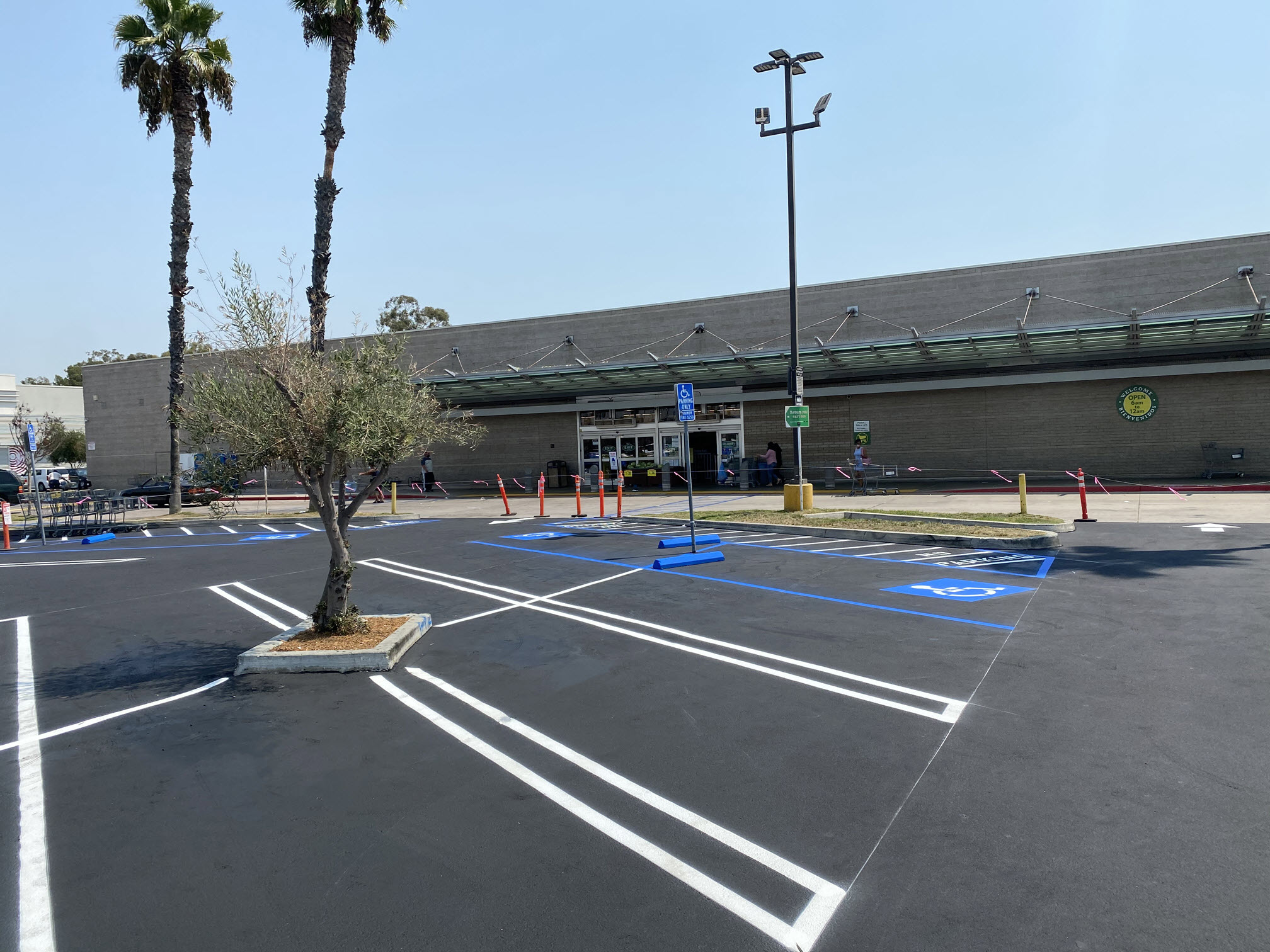
You need a supplier with stock, predictable lead times, and wheel stops that won't crack two years in and force callbacks. Whether the order is 20 units or 200, the quality has to hold up under daily traffic for the life of the lot.
Parking stopsare the precast concrete units that stop a vehicle's wheel at the end of a parking space. If you are shopping for parking blocks, car stops, curb stops, parking curbs, parking bumpers or bumper blocks, these are all the same product under different names, and this is the page you want. The name usually depends on the region and the trade rather than the product. APC's CB-Series is built for passenger-vehicle parking: retail centers, office complexes, HOAs and apartment communities, auto dealerships, and municipal lots. They keep cars from overhanging walkways, landscaping, or the next stall, and they hold their position for the life of the lot.
We have been casting them at our own plant in Pomona, California since 1978. That is four decades of the same family running the same operation, which is why the spec on a CB-Series stop you buy today matches the one you bought five years ago.
Not sure which term is the right one? We break down every name this product goes by, and how it differs from curbs, bollards, and speed bumps, in what that concrete block in a parking space is called.
The line comes in three standard lengths. The 4-foot CB04 fits compact and residential spaces, the 6-foot CB06 is the standard for most commercial parking stalls, and the 8-foot CB08 suits larger spaces and high-traffic lots that need extra visibility. All three use 4,500 PSI cylinder-tested concrete and (2) #4 steel rebar, so the choice between models is about length and coverage, not durability.
Ordering is direct from the plant. Send a quantity and a delivery ZIP and you get pricing and a lead time back within one business day. Freight is planned around weight rather than volume: a truckload carries roughly 100 to 400 car stops depending on the model, so orders that land near a full load are the most economical way to buy. Anything past a handful needs a forklift at the delivery point, which is worth confirming before the truck is scheduled.
If you have been replacing rubber or plastic stops every few years, concrete is the upgrade that ends that cycle. It costs more up front and then stays put. Our concrete vs. rubber vs. plastic cost breakdown runs the long-term numbers, and HOA boards weighing a one-time replacement can see how to fund it without a special assessment.
From our Pomona facility. Predictable lead times for orders from 20 to 200+ units. No distributor lag, no markup.
Verified every batch at 28 days. Vibration settling eliminates the voids that cause cracking under daily traffic.
Steel rebar with tied anchor pins. Survives daily vehicle impact for decades of service before any maintenance.
Manufacturer-direct lead times for orders from 20 to hundreds of units.
One purchase that holds up — versus rubber or plastic stops that need replacing every few years.
Cylinder-tested concrete and steel rebar that won't fail under daily traffic.
Smooth molded finish that holds its look — no repainting, no replacement.
Organize customer parking, protect landscaping, hold up under constant turnover.
Professional parking that lasts decades, protecting property and reducing liability.
Low-maintenance for apartments, condos, HOAs. Install once, skip replacement assessments.
Protects inventory and customer vehicles under constant movement.
Bid-ready specs and documentation for public procurement, with a service life measured in decades.
Interior or exterior. Epoxy bonding option where drilling isn't ideal.
Same plant, same city, since the year we opened. Not a reseller and not an importer.
Car and truck bumpers leaving the yard annually, plus thousands of anchor pins.
Capacity varies by model, and orders that land near a full load are the most economical way to buy.
Cylinder-tested to ASTM C39, with spec sheets your engineer can put in a submittal.
We respond within 1 business day with lead time and pricing.
Yes. Wheel stop, parking block, parking bumper, car stop, curb stop, parking curb, bumper block, car stopper and parking stopper all describe the same product: the barrier at the head of a parking space that stops a vehicle rolling forward. The name usually depends on the region and the trade. If a supplier quotes you a parking block and another quotes a wheel stop, they are quoting the same thing.
One per space is the usual starting point, though plenty of lots skip the spaces that back onto open pavement. Count the spaces where a vehicle could roll into something — a walkway, a wall, a landscaped strip, another row — and that is your number. Worth counting delivery zones and overflow areas too, since those are the ones that get missed on the first pass and then need a second, more expensive order.
The vehicle that hits it. Car stops are sized for passenger vehicles and suit retail, office, apartment and municipal parking. Truck bumpers are considerably larger and heavier, for loading docks, trailer yards, distribution centres and fleet lots. Put a car stop where semi trailers back up and it will break, usually taking the anchor pins and a piece of the asphalt with it. If your lot is passenger vehicles, a car stop is the right product and the more affordable one.
4′ (CB04) wheel stops work well for compact parking spaces or residential garages. 6′ (CB06) is the standard for regular parking spaces in commercial lots. 8′ (CB08) is used for larger spaces or high-traffic areas where extra visibility and vehicle positioning are important.
Our car stops range from about 105 lbs (4′ model) to 210 lbs (8′ model). The weight comes from steel rebar reinforcement and high-density concrete — this prevents wheel stops from shifting or tipping under vehicle impact.
Yes. We offer two anchoring methods: rebar pin anchoring (drilling through the wheel stop into the pavement) or epoxy bonding. Both methods provide secure attachment. Installation guidelines available in our Resources section.
Lead times vary based on order size and current production schedule. Fill out our quote form with your quantity and delivery ZIP — we respond within 1 business day with lead time and pricing.
Yes. We manufacture in Southern California and serve customers nationwide. Shipping costs vary by distance and order size.
Our wheel stops meet standard specifications used in ADA-compliant parking installations. Complete technical specifications available for permit applications and plan reviews.
Yes. Sample units are available for on-site evaluation. Contact us to request one.
Direct from us. We pour them at our own plant in Pomona, California. Send your quantity and delivery ZIP through the quote form and you will get pricing and lead time back within one business day. A truckload carries roughly 100 to 400 car stops depending on the model, and orders that land near a full load are the most economical way to buy.
Concrete vs. Rubber vs. Plastic: The Real Cost Over 25 Years
Read →Buying GuideBuying Wheel Stops Direct From the Manufacturer: Why It's Better
Read →Project PlanningParking Lot Dimensions & Layout Standards, Including Where the Wheel Stops Go
Read →Cost AnalysisWhat Do Concrete Wheel Stops Cost? A Budgeting Guide
Read →